Foods to Avoid with High A1C
The obvious offenders and the hidden ones: sauces, granola, flavoured yoghurt and protein bars. What to cut first for the biggest A1C improvement.
Article collection
The obvious offenders and the hidden ones: sauces, granola, flavoured yoghurt and protein bars. What to cut first for the biggest A1C improvement.
A1C measures 8 to 12 weeks, so nothing shows immediately. When to expect the first movement, how much per month, and why retesting early misleads.
The Mediterranean pattern has the strongest long-term evidence for A1C and heart health together. What to eat, and why it outperforms on adherence.
Which exercise lowers A1C most: walking, resistance training, or HIIT. How to combine them, how much you need, and when in the day to do it.
Which A1C readings need urgent attention, the warning symptoms that matter far more than the number itself, and when to seek same-day medical help.
Snacks that will not spike your blood sugar, why most bars marketed as healthy do, and how to pair carbohydrate with protein or fat to blunt the rise.
Cortisol tells your liver to release glucose, so chronic stress raises A1C directly. How the pathway works and which interventions have evidence.
Low-carb and keto both lower A1C, but by different amounts and with different trade-offs. Which suits you, and the hypoglycemia risk on medication.
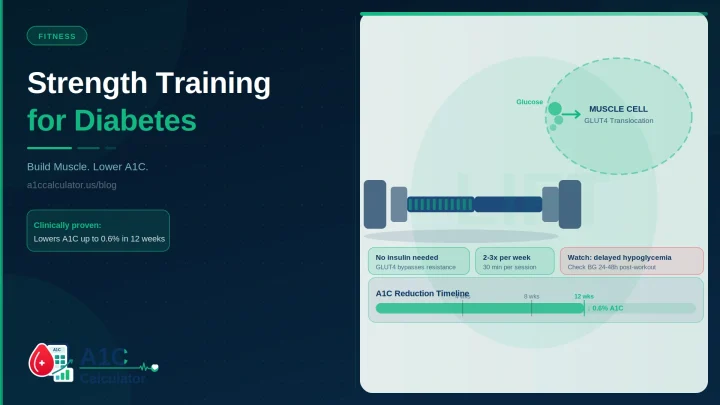
Muscle is where glucose goes. Why resistance training improves insulin sensitivity even without weight loss, plus a twice-weekly starting programme.
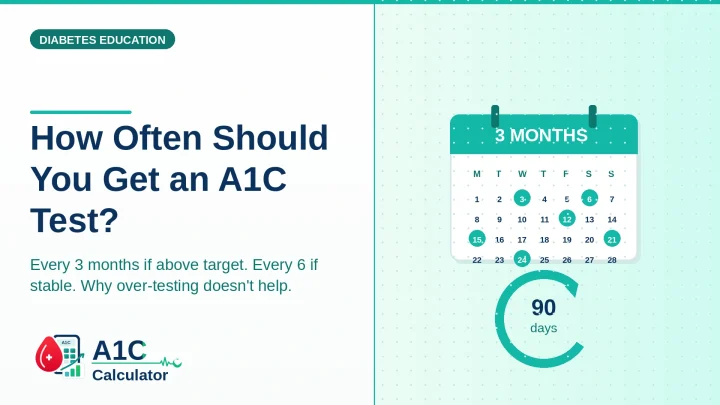
Every 3 months if you are above target, every 6 months if stable, every 1 to 3 years for screening. Why testing more often tells you nothing new.