Vitamin C and A1C: Can It Skew Your Test or Lower Your Blood Sugar?
High-dose vitamin C can interfere with some A1C assays and distort your result. How much is too much, and which lab test methods are affected.
Article collection
High-dose vitamin C can interfere with some A1C assays and distort your result. How much is too much, and which lab test methods are affected.
What Walmart’s A1C test costs, how accurate the at-home kits are, how to read your result, and when a proper lab test is worth paying for instead.
Vinegar can modestly blunt post-meal glucose spikes, but the effect is small and short-lived. What the studies found, and a realistic expectation.
Alcohol moves blood sugar in both directions and can cause delayed lows hours later. What each drink does, and the safe limits worth knowing.
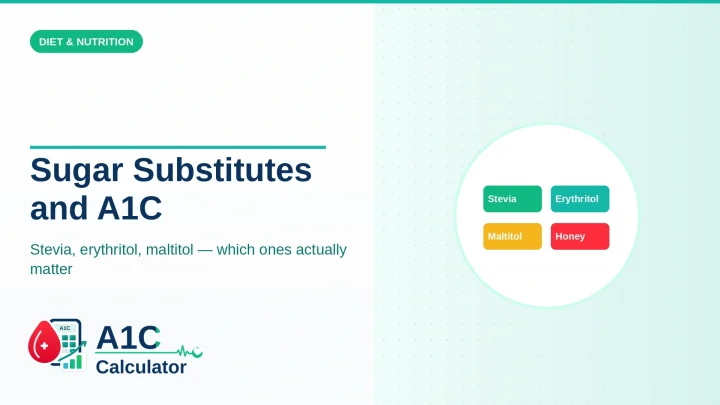
Which sweeteners raise blood sugar and which do not. Stevia, erythritol, sucralose and aspartame compared, plus what the gut-microbiome research shows.
Yes, and the mechanism is cortisol rather than eating habits. How much stress can move your A1C, how fast, and how to tell if it is the cause.
Fasting can lower A1C for some people and cause dangerous lows for others. Who it suits, which protocols have evidence, and the medication warnings.
Airport security rules for insulin and pumps, what to pack, how to handle time zones, and what to do if your supplies are lost or delayed in transit.
Mind-body practice lowers cortisol, and cortisol raises glucose. What the trials actually found for A1C, and which practices have the best evidence.
Dehydration concentrates blood glucose and can inflate your readings. How much water actually matters, and why hydration alone will not lower A1C.